



Style Guide · Ageless Iron Hardware
Matte black works on most homes. The finish is versatile — the profile, texture, and plate length need to match the architecture behind it. Here's how to make the right call by style, and which brands are worth looking at in each category.

Start With the Material, Not the Finish
Most matte black hardware is zinc alloy under a powder-coat skin. It's fine for interior closets. It's not built for front doors or high-contact areas where the finish gets stressed daily.
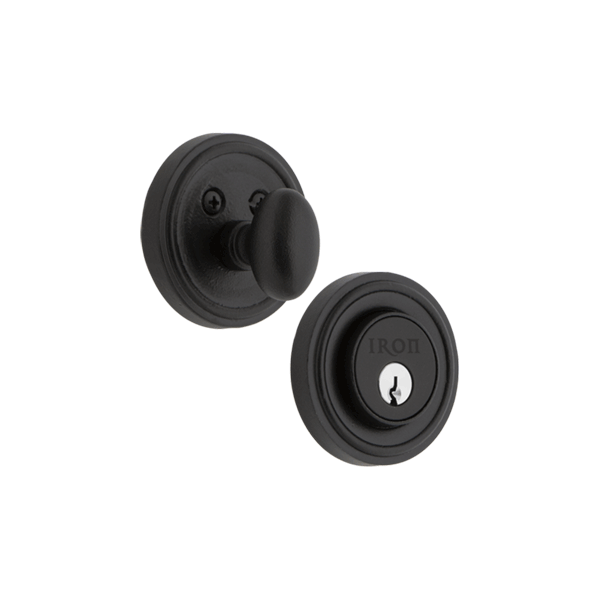
Ageless Iron is solid cast iron — heavier, denser, finished differently. Every piece goes through the same process: solid cast iron, sand blasted and deep cleaned, zinc plated for corrosion protection, powder coated matte black, then tested in Florida for UV and salt resistance. That last step is a real benchmark. Most hardware brands don't bother with it. Browse the full collection at Ageless Iron Hardware.
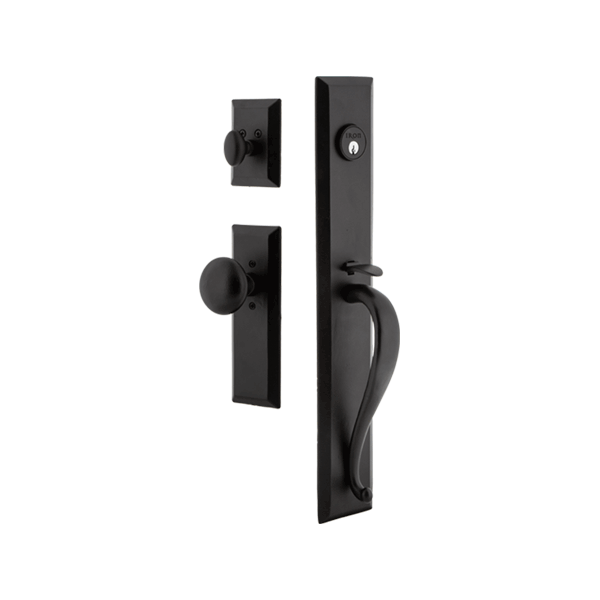
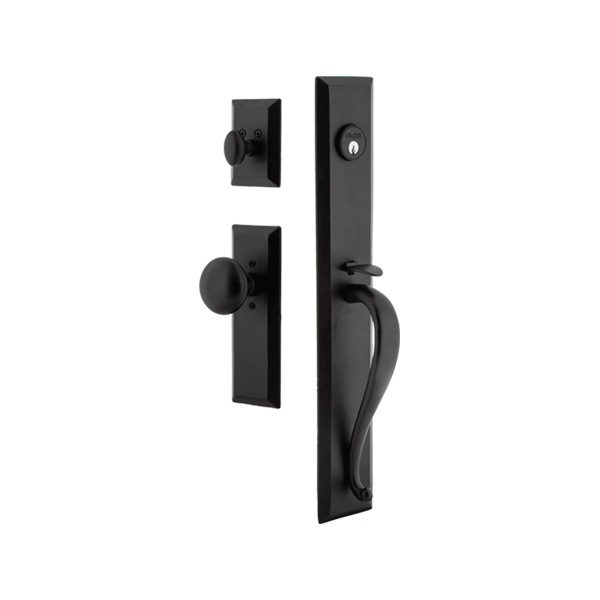
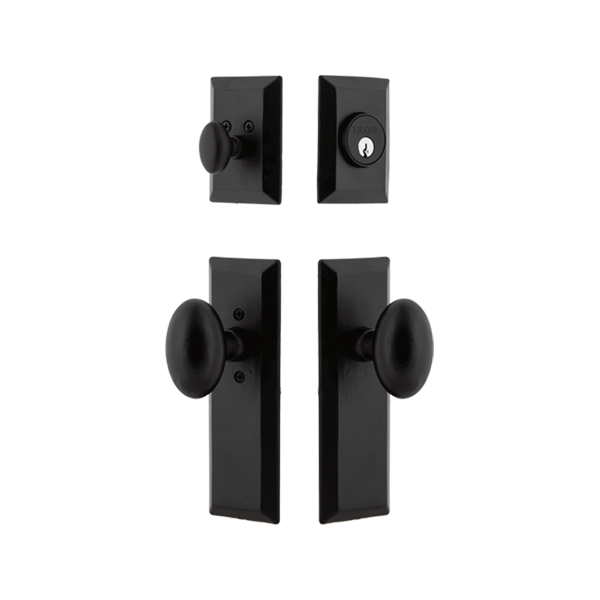
The Keep Entry Set weighs 2.1 lbs. A comparable zinc handleset weighs 0.6 lbs. You feel the difference the moment you open the door — and every day after.
The textured surface left by the sand-blast process hides minor wear without exposing raw metal. Smooth zinc shows silver scratches. Textured cast iron reads as patina.
Match the Hardware to the Architecture
The five styles below cover most American homes. In each case, the recommendation comes down to plate length and lever profile — the two decisions that determine whether the hardware belongs or just sits there.
Farmhouse & American Country
Black ironwork belongs in farmhouse interiors the way it always has — utilitarian, honest, substantial. The textured cast iron surface reads as intentional here. Use the Ageless Iron Keep Long Plate with the Tine or Cannon lever. Round knobs also work; farmhouse architecture isn't particular about lever vs. knob.


For buyers who want an ornate, more decorative farmhouse look, Nostalgic Warehouse offers vintage-reproduction hardware in Oil-Rubbed Bronze — a warmer, more traditional dark finish well suited to rooms with rich wood tones and detailed millwork. Different material (forged brass), different finish character. Worth comparing if the space leans more country than modern farmhouse.

Meadows Long Plate with Manor Lever in Oil-RubbedBronze
Avoid slim minimal levers with small rosette plates — they're scaled for modern spaces and feel off against shiplap and apron-front sinks.
Craftsman & Arts and Crafts
Craftsman design rewards materials that show how they were made. The sand-blasted surface of cast iron has visible texture — not rough, but not the glossy smoothness of zinc hardware. It reads as hand-finished, which is exactly right here. Ageless Iron Keep Long Plate with the Lance or Palisade lever. Don't modernize craftsman doors — give them hardware that's worthy of the millwork.


Nostalgic Warehouse has a dedicated Craftsman collection in Oil-Rubbed Bronze that aligns well with the style's historical roots. Solid brass construction with period-appropriate rosette profiles. A legitimate option if Oil-Rubbed Bronze is already established in the space.
Craftsman doors often have three hinges per leaf. Brushed nickel hinges with black hardware signals incomplete design. Ageless Iron's powder-coated steel hinges close that gap.
Transitional
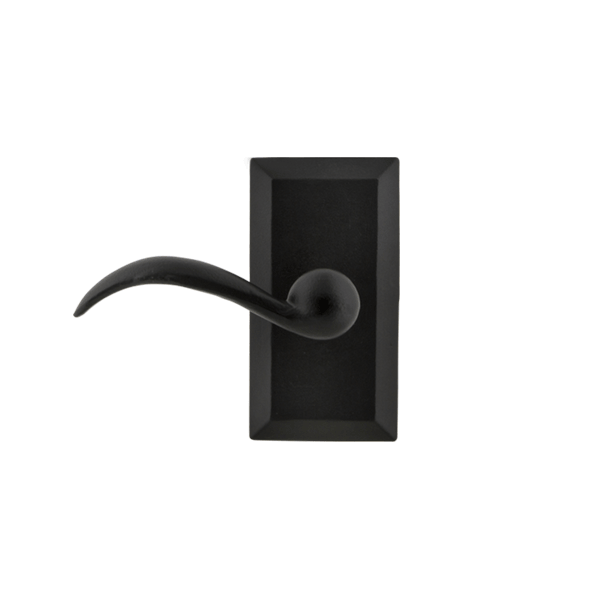
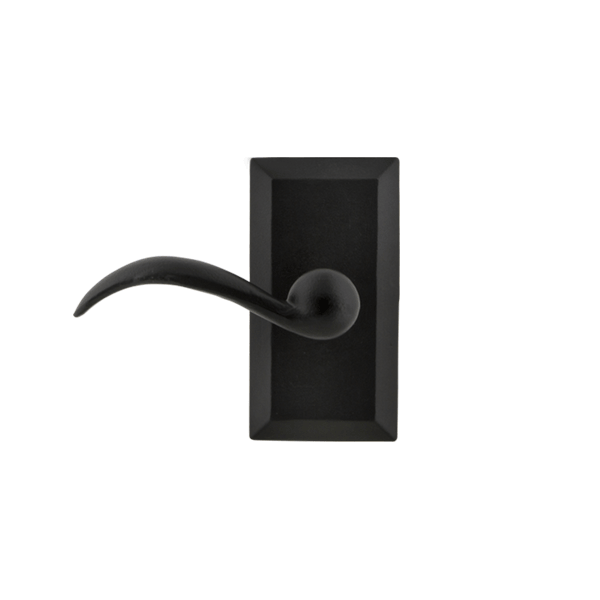
The most common style category — and the most forgiving. Black hardware reads differently depending on what surrounds it: traditional next to warm wood, contemporary against white walls and flat-panel millwork. The Ageless Iron Vale Short Plate is the transitional workhorse. The Crescent lever is the most versatile profile in the collection — curved enough to feel comfortable, linear enough to look intentional.


For buyers wanting a more decorative transitional profile, Grandeur Hardware specializes in transitional style — their Carré collection offers a clean geometric form that bridges modern and traditional. Solid brass construction with a finish range built around the transitional aesthetic.

Transitional open-plan kitchens are where the whole-home matching system pays off most visibly. Cabinet hardware, door levers, and hinges share a sightline. One finish code eliminates the mismatch entirely.
Modern & Contemporary
Modern interiors are precise about hardware — the profile needs to be clean and the plate minimal. Ageless Iron Vale Short Plate with the Lance lever. The smaller plate disappears against the door face, which is exactly what modern hardware should do. The material case for cast iron is the same as everywhere else: the finish holds. Smooth powder coat over zinc looks identical on day one. Two years of daily use tells a different story.


Vale Short Plate Entry Set with Dirk Lever Vale Short Plate with Dirk Lever
Viaggio Hardware leans into the modern luxury lane — European engineering, Italian-inspired profiles, and a 'Design Your Own' configurator for buyers who want more finish and form control. A stronger fit for contemporary interiors that prioritize sleek lines and imported craftsmanship over material depth.

Quadrato Rosette with Milano Lever in Satin Black - Passage
Colonial, Traditional & Period Homes
Cast iron hardware on a traditional home isn't a trend decision — it's a return. Before powder coat and zinc alloy, wrought iron and cast iron were what homes were built with. Ageless Iron Keep Long Plate across the board. The Cannon lever has the right weight and form for traditional doors. The Keep Entry Set includes a deadbolt — part of the set, not a separate add-on.


For highly ornate Victorian or colonial interiors where decorative detailing matters as much as the finish, Grandeur Hardware and Nostalgic Warehouse both offer solid forged-brass construction in Timeless Bronze and Oil-Rubbed Bronze — dark finishes with more warmth and historical accuracy than matte black in rooms with elaborate millwork.
The only context where matte black ironwork can feel off is against highly ornate Victorian millwork, where a warm bronze has stronger historical accuracy.
One System, Every Door
Most people buy hardware door by door — front door first, then the rest of the house over time. The result is hardware that almost matches. The front door is warm-toned black. The bedroom levers are cool-toned. The hinges are whatever came with the door.
Ageless Iron covers the complete system: entry sets, interior hardware, hinges, cabinet knobs and pulls, switch plates, and outlet covers — all in the same powder-coated matte black finish. One brand, one finish code, zero mismatches. The difference between a renovation that looks designed and one that looks like it happened over time comes down to that decision.
FAQ
What is farmhouse interior style?
Farmhouse style draws from rural American architecture — natural materials, functional forms, and honest craftsmanship over ornamentation. Think shiplap walls, exposed wood beams, apron-front sinks, and open shelving. The hardware follows the same logic: substantial, textured, unpretentious. Black ironwork fits here because it looks like it was made to work, not to impress.
What is craftsman interior style?
Craftsman style grew out of the early 20th century Arts and Crafts movement — a reaction against mass production that celebrated handwork and natural materials. Defining features include built-in cabinetry, tapered columns, deep overhanging eaves, and millwork that shows how it was made. Hardware in craftsman homes should have visible texture and material weight. Smooth, factory-finished zinc hardware reads as out of place; cast iron or solid brass that shows its process reads as intentional.
What is transitional interior style?
Transitional style sits between traditional and contemporary — clean lines without the coldness of modern minimalism, warmth without the ornamentation of traditional design. It's the most common style category in American homes built or renovated in the last 20 years. Hardware choices are more flexible here than in any other style, which is exactly why the wrong profile still stands out. The goal is hardware that doesn't force a decision either way.
What is modern interior style?
Modern interior style prioritizes minimalism, clean geometry, and the absence of decorative detail. Flat-panel millwork, uncomplicated trim profiles, and neutral palettes are the baseline. Hardware is expected to integrate rather than stand out — small plates, linear lever forms, no surface texture that competes with the architecture. Every element earns its place by function first, form second.
What is traditional interior style?
Traditional interior style draws from European and early American architectural history — symmetrical layouts, detailed millwork, raised-panel doors, and hardware with visual weight and presence. It's the broadest style category, covering everything from colonial farmhouses to Victorian townhouses. The common thread is that materials and forms reference the past rather than the present. Cast iron hardware belongs here because it actually is historical — black ironwork was the standard long before brass became the residential default.
What lever profile works best for a modern home that still wants some warmth?
The Crescent lever on the Ageless Iron Vale Short Plate. The curved form adds warmth without the heavier visual weight of the Cannon or Palisade. Alternatively, Viaggio's Milano Lever in Satin Black offers a sleek European profile if a smoother, slightly shinier finish suits the space better.
What's the difference between matte black and Oil-Rubbed Bronze for traditional homes?
Matte black is a clean, non-reflective finish that reads as contemporary even in traditional settings. Oil-Rubbed Bronze — the signature dark finish at Nostalgic Warehouse — has warm undertones and an aged character that reads as more historically specific in period homes. If the home has original Victorian or colonial details that lean warm, Oil-Rubbed Bronze has stronger visual continuity. Matte black is the more versatile choice across mixed or updated traditional interiors.
The complete Black Iron Collection
Entry sets through switch plates — one cast-iron finish across every piece in your home.
Shop the Full Collection


