

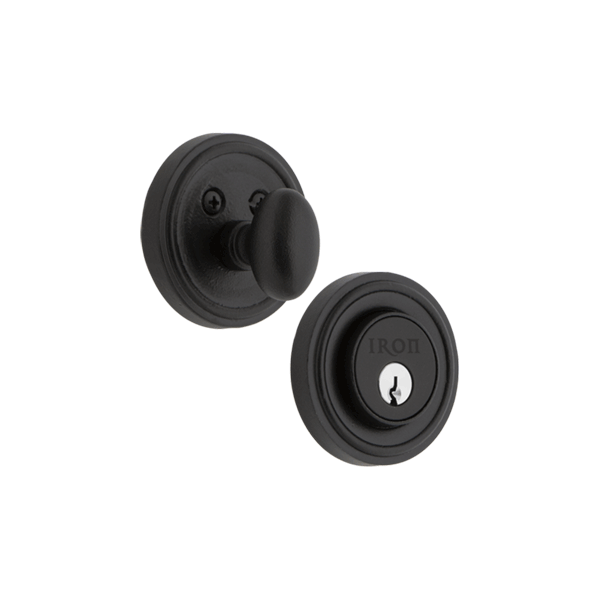
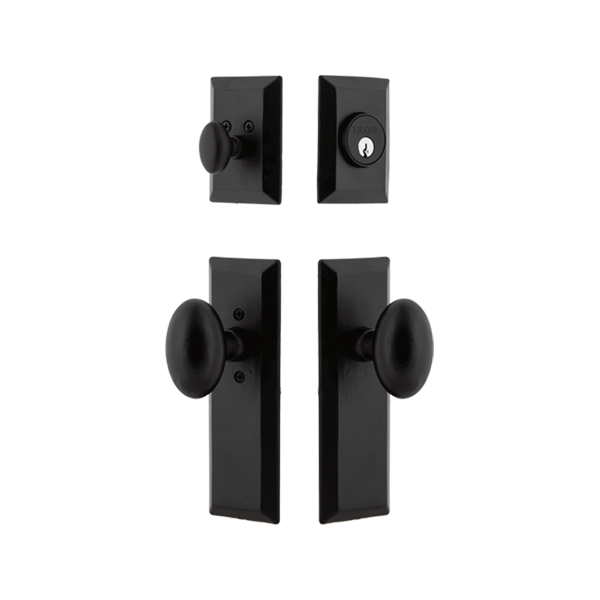


What makes one black door knob better than another is what's underneath the finish, not the finish itself - solid cast iron versus hollow zinc alloy. Two knobs could look the same in a photo and still be completely different once you're holding them: one sits heavy in your hand, while the other feels light and a little hollow.
The Difference Shows Up in Your Hand First
Two black door knobs could look the same in a photo. Same shape, same matte sheen, same price range if you're only scrolling. Pick one up and that stops being true. A solid knob has weight that sits in your palm, and when you turn it, feels controlled, almost deliberate. A hollow one feels light in a way that's hard to describe until you've held both, and the turn has a faint looseness to it.
Tap the knob lightly with a fingernail, and you'll hear it too. A solid knob gives a dull, short sound. A hollow one rings a little, the way an empty can does. None of this shows up in a product photo, which is exactly why so many buyers end up with a knob that looks right online and feels wrong on the door.
A knob that photographs perfectly can still be hollow underneath. Weight and sound are the only two things a photo can't fake.
What's Actually Under the Black Finish
The two materials doing almost all the work in the black door knob market are cast iron and zinc alloy, and they are not close substitutes. Zinc alloy is inexpensive, casts quickly, and takes a powder coat finish well enough to look good on day one. It's also lighter and more prone to flexing under pressure, which is why a zinc knob can feel slightly hollow even when it technically isn't.
Cast iron is denser and heavier from the start. Ageless Iron's cast iron hardware, for example, is solid cast iron, sand blasted and deep cleaned, zinc plated for corrosion protection, powder coated matte black, then tested in Florida for UV and salt resistance before it ships. That process is the reason the finish maintains its integrity years later, on interior doors and exterior ones alike.
Matte black finish looks the same on both materials at first. What's underneath it doesn't behave the same way.
The Ageless Iron Knob and Lever Lineup
Solid cast iron doesn't mean one option. Ageless Iron's knob lineup covers a range of profiles: the Keep Knob for a classic rounded shape, the Aeg Knob for a slightly more architectural line, and the Krystall Knob for a faceted look that catches light differently than the smooth options. All three come in passage, privacy, and dummy functions, so the same knob style works on a hallway door, a bedroom door, or a closet with no lock at all. Porcelain knobs are available on select styles for buyers who want texture contrast against the matte black cast iron body.


The same cast iron construction and finish carry through to Ageless Iron cabinet hardware, including the Turret Cabinet Knob. That means the hardware on a door and the hardware on nearby cabinetry can share the same material, finish, and character, creating a more consistent look throughout the room.
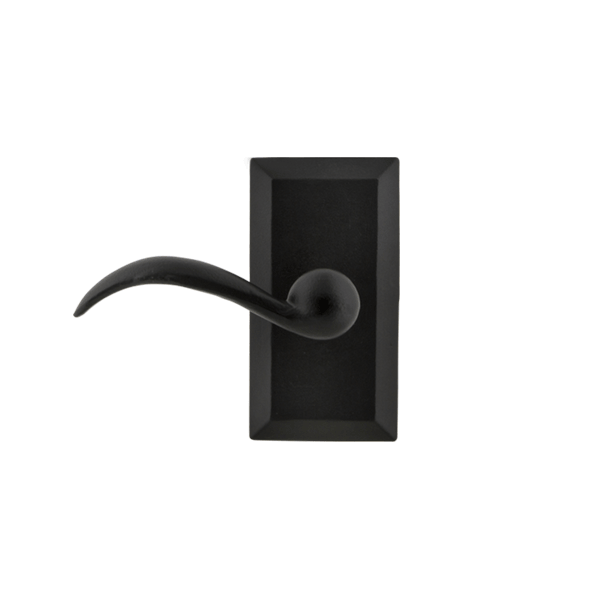
For doors that call for a lever instead of a knob, the lever collection runs six profiles: Tine, Lance, Cannon, Crescent, Palisade, and Dirk, ranging from simple straight bar shapes to more sculpted forms. Every lever is cast, plated, and finished the same way as the knobs, so a home mixing knobs on some doors and levers on others still reads as one system rather than two.
Ageless Iron knobs and levers are designed to pair with the same plate and rosette options, including the Keep Long Plate, Keep Tall Plate, Vale Short Plate, and Loch Rosette. This mix-and-match flexibility makes it easier to coordinate door hardware styles while working with an existing door configuration, so buyers can update the look without replacing more hardware than necessary.
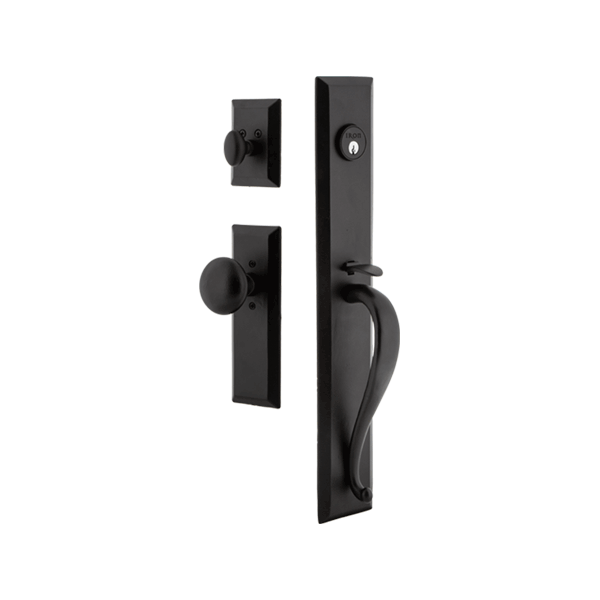
The knob is rarely where a whole-home upgrade stops. Ageless Iron builds the same solid cast iron and matte black process across entry sets, interior hardware, hinges, cabinet hardware, switch plates, and outlet covers. One brand, one finish code, zero mismatches, so a knob doesn't end up being the one piece in the house that doesn't quite match everything else.
A single upgraded knob on an otherwise mismatched door still reads as unfinished. The weight and finish only pay off as part of a matched system.
A Look That Doesn't Date Itself
Finish trends move fast. Brushed nickel had its decade, oil-rubbed bronze had its run, and matte black has held its place longer than either because it doesn't lean on a single style to work. It sits as comfortably on a farmhouse front door as it does on a clean modern interior slab, without looking like it was chosen to chase a trend.
The knob profiles carry that same range. The Keep Knob's rounded shape reads classic and doesn't compete with ornate trim or simple modern moulding. The Aeg Knob's straighter lines lean into craftsman and traditional interiors. The Krystall Knob's faceted face adds a detail for rooms that want a little more presence without changing material or finish. Three different looks, one build.
That's the part that actually makes a design "timeless" instead of just currently popular: the material and construction stay constant while the profile options let the knob fit the room, not the other way around. A homeowner updating a kitchen in five years isn't stuck matching a finish that's aged out. The matte black finish and cast iron underneath haven't gone anywhere.
A style choice is easy to change later. A material choice is what you're actually living with day to day.
How to Check Before You Buy
A few checks catch the difference before the knob is on your door:
Read the material line on the product page. "Zinc alloy" or "zamak" means the lighter, less durable option. "Cast iron" means a denser build that holds its finish longer.
Compare listed weight if it's available. A full cast iron entry handleset runs close to 2.1 lbs, against roughly 0.6 lbs for a standard zinc handleset covering the same door. Knobs scale down from there, but the same ratio holds. Heavier weight is not a marketing detail; it's the material.
If you're shopping in person, pick the knob up before you decide. It's the fastest test there is, and it's the one a listing photo can never give you. Our knob collection and lever collection are built from the same solid cast iron, so every piece on a door reads as one system rather than a mix of finishes.
A knob that's slightly more expensive but noticeably heavier is usually the better long-term buy, especially on exterior and high-traffic doors.
FAQ
Are all black door knobs made from the same material?
No. Most black door knobs are either zinc alloy or cast iron, and the two behave very differently over time even though the finish looks the same. Zinc alloy is lighter and less resistant to flexing. Cast iron is denser and holds its shape and finish longer, especially outdoors.
How can I tell if a knob is solid or hollow before buying?
Check the listed material and weight if the retailer provides them. In person, pick the knob up: solid cast iron sits heavy in the hand and turns with smooth resistance, while a hollow zinc knob feels light and can sound slightly tinny when tapped.
Does cast iron cost more than zinc alloy knobs?
Usually, yes. Cast iron knobs typically run higher than commodity zinc options because the material and finishing process take longer. The tradeoff is a knob that holds its finish and function well past the point a zinc knob starts to loosen or wear through.
Do cast iron knobs come in different styles?
Yes. Ageless Iron's cast iron knob lineup includes the Keep Knob, Aeg Knob, and Krystall Knob, along with porcelain options, so the material upgrade doesn't limit the look. Each pairs with the brand's lever styles for a matched whole-home system.
How long does a door knob last?
It depends almost entirely on material and finish, not the brand name on the box. A zinc alloy knob with a thin electroplate finish can start showing wear, loose turns, or exposed metal at the high-contact points in as little as two to three years, especially on an exterior door. A cast iron knob with a powder coat finish over a corrosion-resistant base holds up considerably longer, since the denser metal doesn't flex and stress the finish the way zinc does. Daily use matters too. A front door knob used dozens of times a day wears faster than an interior closet knob, regardless of material.
Feel the Difference for Yourself
One brand, one finish code, zero mismatches. Solid cast iron knobs and levers built to hold up.
The Complete Black Iron Collection


