



Buying Guide
Most people shop for a black front door handle by finish first and function last — then find out during installation that the backset doesn't fit, the set they ordered doesn't lock, or the finish underneath wasn't what the photos implied. This guide walks through every decision that actually matters: knob or lever, what's under the black, what size to order, which function you need, and how to make sure it matches the rest of your door hardware once it's on.
Knob or Lever: Which Black Front Door Handle Fits Your Door
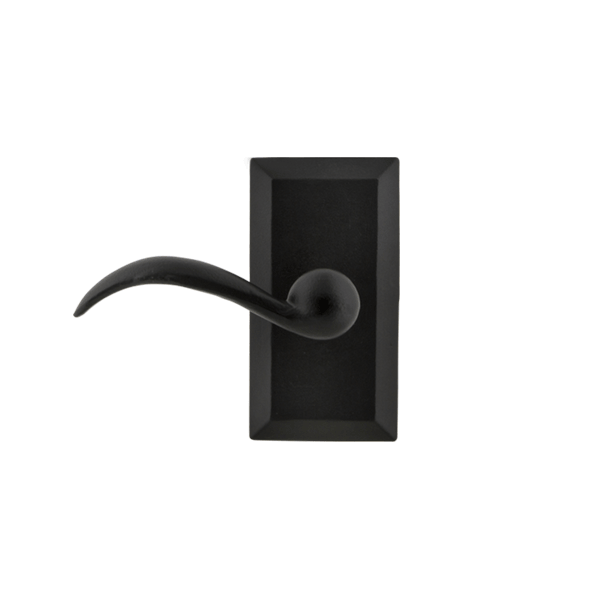
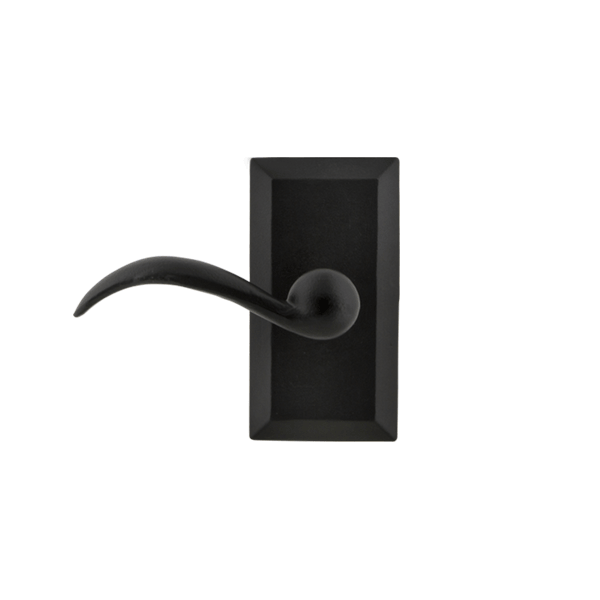
A knob and a lever do the same job. The difference is grip and how the hardware reads on your door. Knobs turn — a rounder, more traditional profile that suits farmhouse, craftsman, and colonial doors. Levers push down, which makes them easier to operate one-handed or with an armful of groceries, and they tend to read more transitional or modern.

Door Lever

Door Knob
Grip matters for more than aesthetics. If anyone in the house has arthritis, limited hand strength, or is likely to be carrying something when they walk in the door, a lever is the more forgiving choice. Knobs require a full grip and twist; levers only need a push.
Material matters more than shape. A cast iron front door handle carries real weight in the hand — an Ageless Iron entry set runs about 2.1 lbs versus roughly 0.6 lbs for a standard commodity handleset. That density is what keeps a lever from feeling loose after a few years of daily use, and it's the first thing people notice when they pick one up in person. Ageless Iron's lever lineup includes Tine, Lance, Cannon, Crescent, Palisade, and Dirk; knob options include the Keep Knob, Aeg Knob, Krystall Knob, and porcelain finishes, paired with the Keep Long Plate, Vale Short Plate, or Tall Plate.
If you're matching an existing knob-based interior, stick with knobs throughout. Mixing knobs and levers on the same floor tends to look accidental rather than intentional.
Browse black front door handle levers and knobs →
Material and Finish: What's Actually Under the Black
Most product pages for a black front door handle describe the color and stop there. That's a problem, because the color tells you almost nothing about how the hardware will hold up. If a listing doesn't name the metal underneath the finish, it's very often zinc alloy — a lightweight, budget-tier material that works fine indoors but is prone to flaking and pitting on exterior hardware once it's exposed to years of temperature swings and weather.
Ageless Iron hardware starts as solid cast iron — never zinc alloy. Every piece is sandblasted and deep-cleaned, zinc-plated for corrosion protection, powder-coated in matte black, and then tested in Florida for UV and salt resistance before it ships. That combination of a denser substrate and a proven finish process is what separates hardware that still looks good in year five from hardware that needs replacing.

Ask any manufacturer directly what metal is under the finish. If they can't answer plainly, that's your answer.
See how Ageless Iron hardware is made →
Backset and Sizing: Measure Before You Order
The backset is the distance from the edge of your door to the center of the bore hole — it determines how far the handle sits from the door's edge, and it's the single most common reason a black front door handle gets returned. Most residential doors use a standard 2⅜" or 2¾" backset. Measure your existing hardware, or the bore hole if you're starting from scratch, before you order.
|
Backset Measure edge of door to center of bore hole — confirm before ordering. |
Door Thickness Standard residential doors run 1¾" — check yours if custom-built. |
Handing Standing outside the door, note which side the hinges are on. Hinges located on the left indicate a left-hand door, and vice versa. |
Getting the backset right isn't optional — it's the measurement that determines whether the latch and deadbolt line up with your door prep at all, not a detail to eyeball.
Once you've confirmed your backset and ordered the right hardware, installation is straightforward — but it helps to know what you're walking into before the box arrives. Ageless Iron's installation help page has step-by-step videos and printed instructions broken out by configuration: passage and privacy sets, one-piece handlesets, single-cylinder deadbolts, and tall plate setups. Worth a quick look before you pick up a screwdriver.
Function Types: Keyed Entry, Passage, Privacy, and Dummy
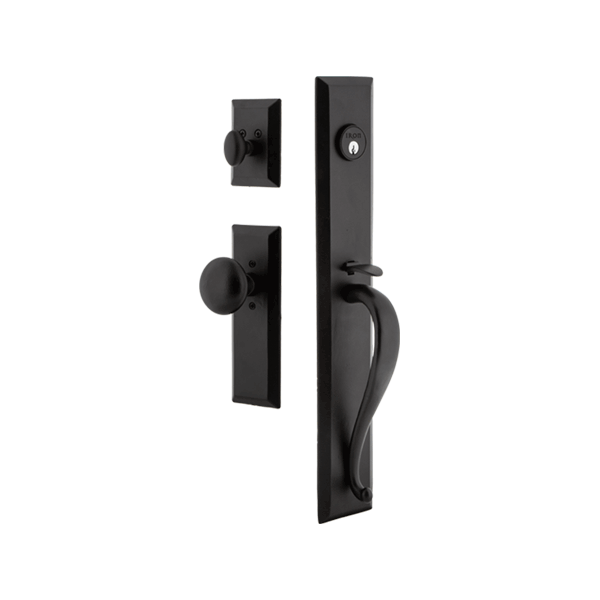
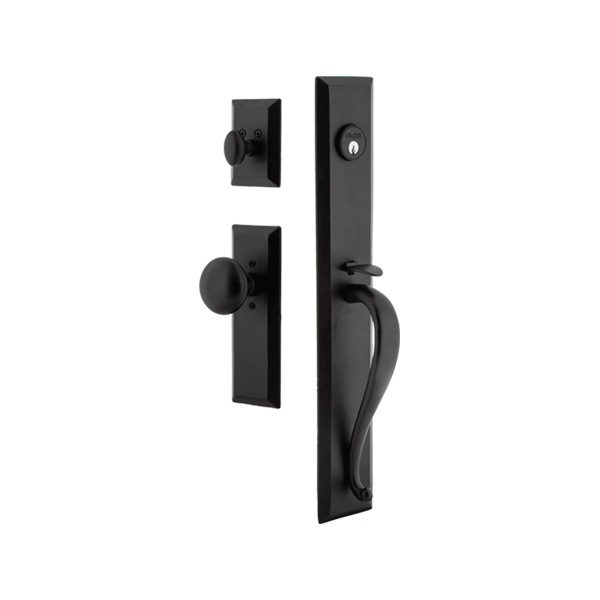
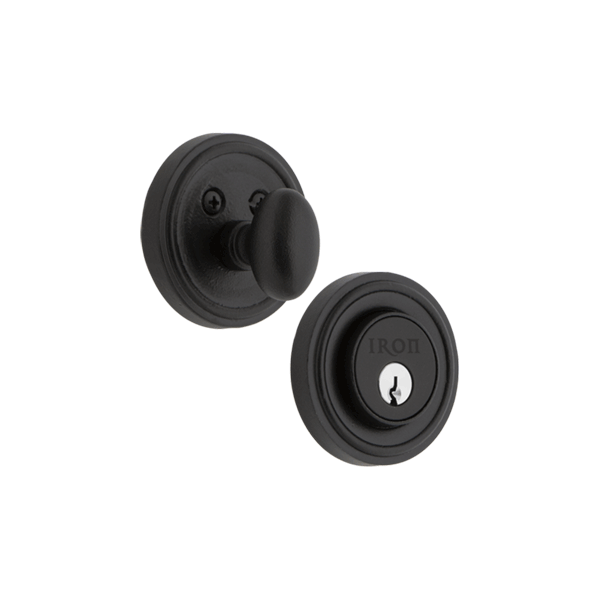
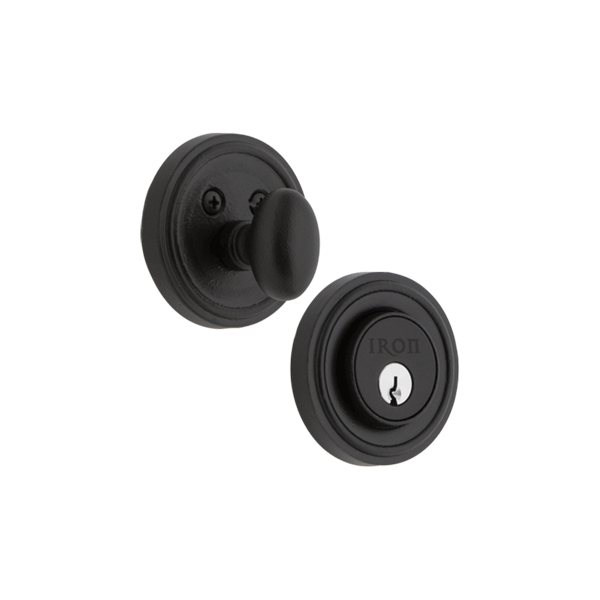
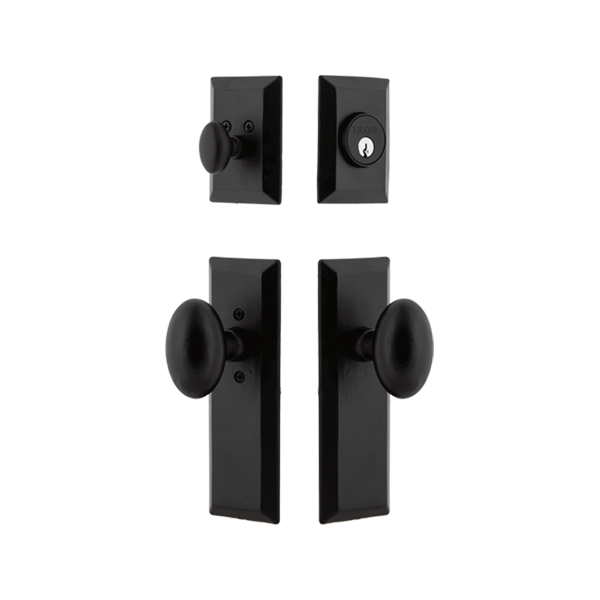
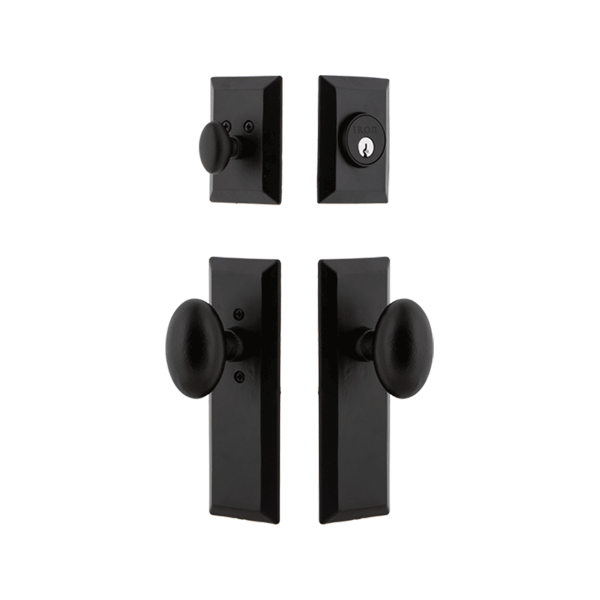
A keyed entry setis built for your front door — it locks from the outside and always includes the deadbolt as part of the set, not as a separate purchase. That's the function to look for anywhere the door separates your home from the outside.

Vale Short Plate Entry Set with Black Shadow Porcelain Knob - 2 3/8"

Move to the hallways and closets, and the needs get simpler. A passage set — one that contains a latch, but does not lock — is built for doors that just need to open and close: hallways, closets, laundry rooms. It's the most overlooked function on this list, mostly because people default to a locking set out of habit even where nothing needs locking.

Loch Rosette with Black Shadow Porcelain Knob - Passage - 2 3/8 inch

Vale Short Plate with Lance Lever - Passage - 2 3/8 inch
Bedrooms and bathrooms call for something in between. A privacy set locks from the inside only, and every Ageless Iron privacy set includes an emergency release hole on the exterior side plus a release key, so a locked-in toddler or a jammed door is never a real emergency.

Dummy hardware is different from all three. It has no latch and no lock — it's mounted directly to the door as a pull, nothing more. That makes it the right call for closets and French doors that don't actually latch shut, where you still want the handle to match the rest of the house.
Order function by room, not by preference — a privacy set on a closet door with no lock mechanism to engage is wasted hardware.
See entry, passage, privacy, and dummy sets by function →
Matching the Rest of Your Door Hardware
A black front door handle is usually the first piece of hardware people upgrade — and the easiest one to get wrong in isolation. Buy it as a standalone piece and there's a real chance it doesn't match the interior levers, hinges, or cabinet hardware you replace next, even if all three are labeled "matte black." Finish names aren't standardized across brands, and a smooth black from one manufacturer can sit noticeably differently next to a textured powder coat from another.
Ageless Iron is built around solving that problem directly. Entry sets, interior hardware, hinges, cabinet hardware, switch plates, and outlet covers all ship in the same cast-iron matte black finish — one brand, one finish code, zero mismatches. The door itself is where a mismatch shows up fastest: a matte black lever on a door with brushed-nickel hinges reads as unfinished, because the hinges are visible every time the door moves.
If you're phasing a renovation over time, buy the front door handle from the same collection you plan to use for the rest of the house — even if the other pieces come later. Matching a finish months apart is far easier than matching one you can no longer identify.
Browse the full matched hardware system →
FAQ
What's the difference between a door knob and a lever for a front door?
Both operate the same latch mechanism — the difference is grip and style. Knobs turn and suit traditional or farmhouse doors; levers push down and read more transitional or modern. Choose based on the rest of your home's hardware, not the front door alone.
What backset size do I need for a black front door handle?
Measure from the edge of your door to the center of the existing bore hole. Most residential doors use a 2⅜" or 2¾" backset, and this measurement is required to order the correct hardware — not a detail to guess at.
Does a keyed entry set include the deadbolt?
Yes — the deadbolt comes with every keyed entry set, no extra charge and no separate line item. Ageless Iron also sells deadbolts on their own, if you just need a second lock or a replacement for an existing one.
What's the difference between privacy and dummy door hardware?
Privacy hardware locks from the inside and is used for bedrooms and bathrooms; it includes an emergency release for the outside. Dummy hardware has no lock or latch at all — it's a fixed pull mounted to doors that don't need to lock, like closets or French doors.
How do I make sure my black front door handle matches my other hardware?
Stick to one brand and one finish across the pieces that share a sightline — front door, interior levers, and hinges especially. "Matte black" isn't a standardized finish name, so hardware from different manufacturers can look noticeably different side by side even with the same label.
The Complete Black Iron Collection
Entry sets through switch plates — one cast-iron finish across every piece in your home.
Shop the Full Collection


